

Istanbul Engineering Structures: Architecture Problems
24 August 2026
A dome 32 metres across and 61 centimetres thick — standing since 537
Three days in Istanbul with four cameras. A Greek documentary reads the city not as a destination but as a sequence of engineering problems — and the solutions to them.
The dome of Hagia Sophia from below. At the four corners, the spherical triangles known as pendentives gather the entire load and carry it down to four piers:

photo : Haroon Ameer / Unsplash
In 537, two mathematicians hung a dome 32.6 metres in diameter and 61 centimetres thick in mid-air. A slenderness ratio of roughly one to fifty-three. No computer, and no precedent at that scale. It is still standing.
The problem Justinian handed to Anthemius of Tralles and Isidore of Miletus was not an artistic one. It was geometric: how do you set a circular dome on a square plan? Their answer gathers the whole load into four spherical triangles and brings it down to four piers. Between them there is no wall. There is space.
Watch the documentary (30 min): https://youtu.be/Na2mUjltjkE
The mosaic above the southwestern entrance of Hagia Sophia: the enthroned Virgin between Constantine, offering the city, and Justinian, offering the church.

A thousand years later, the Blue Mosque across the square attempted the same thing with four columns five metres in diameter each. It produced a dome of 23.5 metres — smaller, with far more material. One solution is an equation. The other is stone.
Eighty thousand cubic metres beneath the city
The Basilica Cistern: 138 by 64 metres, 336 columns, a capacity of 80,000 cubic metres of water (532 AD).

In the same year, a few metres away, the same emperor built a reservoir 138 by 64 metres: 336 columns, a capacity of 80,000 cubic metres. Every column was salvaged from older buildings — which is why no two of them match. The water arrived by gravity from Thrace, nineteen kilometres away, and clarified itself as it settled, using no energy at all.
One of the two Medusa heads, set upside down at the base of a column. The column rests literally on her face.

After 1453 the cistern was forgotten for roughly a hundred and fifty years. Residents knew only that digging a well in the floor of their own house produced water. Some of them caught fish.
The strait that is not allowed to close
The Bosphorus Bridge (1973): a span of 1,074 metres, with both feet on land — one on each continent.

The first Bosphorus bridge spans 1,074 metres without a single pier in the water. The reason is not aesthetic: under the Montreux Convention these waters are an international passage. The strait does not close.
The same problem, in different materials, returns in every era of this city. The chain that sealed the Golden Horn was not taut — it floated on eight timber rafts and was raised or sunk by winches inside the forts at either end. It worked for seven hundred years, and in 1453 it never broke: Mehmed II moved seventy ships overland instead, across the hill of Galata, in a single night. And at the end of the sequence stands the roof of the new airport: more than one million square metres under a single roof, solving exactly the problem of 537 — with a steel space frame instead of brick sixty-one centimetres thick.
Running between all of it is the Greek city: the Ecumenical Patriarchate in the sixth seat of its history, occupied since 1601; the Sealed Gate, shut since 1821, when Patriarch Gregory V was hanged from it on Easter Day; and the Great School of the Nation, today without pupils. More than 100,000 Greeks lived here until the middle of the twentieth century. Today there are fewer than 2,000.
The documentary places all of this in sequence, filmed on location in April. It closes with a question rather than a conclusion: every era had a problem of physics to solve, and this city solved them all — so which one are we solving today, for someone else to carry on 1,500 years from now?
▶ The documentary «Constantinople: 1500 Years of Engineering» (30 min), StrataReel by Evangelos: https://youtu.be/Na2mUjltjkE
Photographs 02–05: Evangelos Bikakis / StrataReel — released free of charge for publication with credit to the source. Photograph 01: Unsplash, free licence — the photographer is credited in the caption.
Contact
CONTACT
Evangelos Bikakis — StrataReel by Evangelos
hello(at)(at)stratareel.com · +30 6936621600
Filmed on location in Istanbul, 30 April – 2 May 2026.
, Istanbul, Turkey design images / information received 230826
Location: Istanbul, Turkey.
Istanbul Architecture Designs
Contemporary Istanbul Architectural Selection
Istanbul Architecture Designs – chronological list
Beymen Tersane luxury retail building design
Architecture: OMA
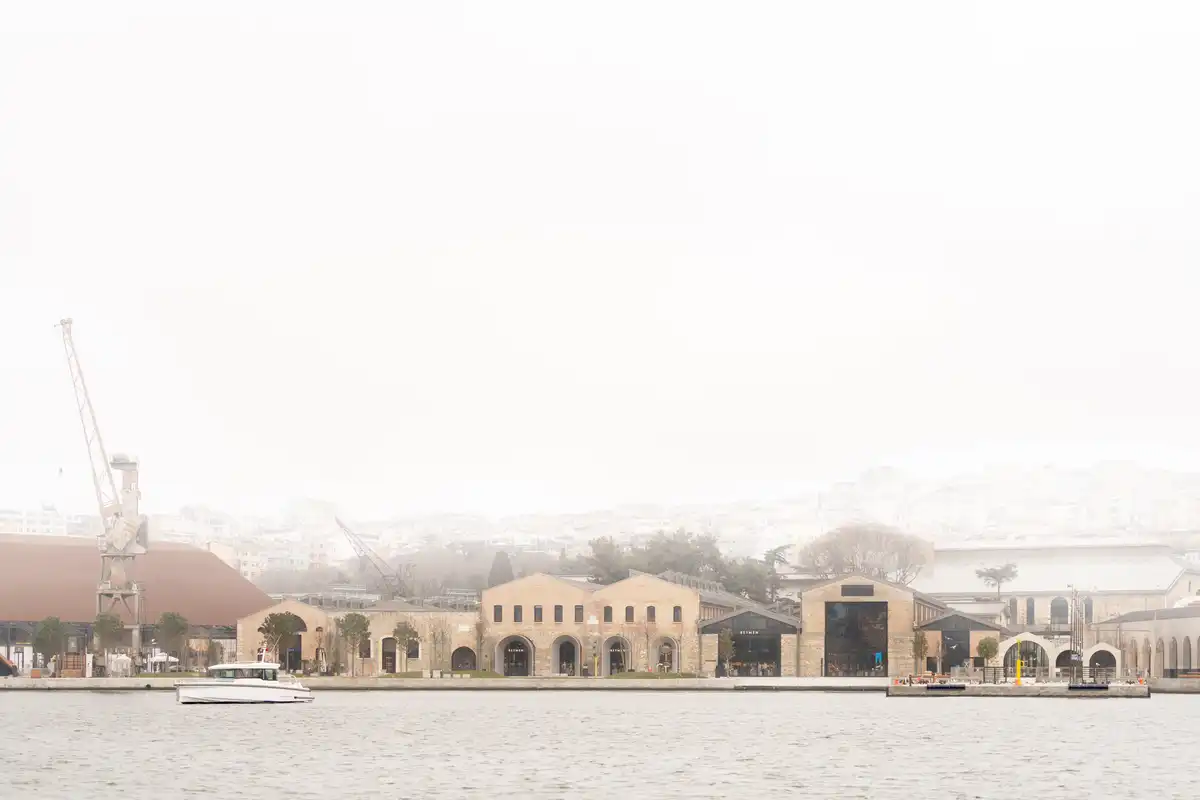
photo : Marco Cappelletti
ORIGAMI A Sensory Bakery Experience, Tersane
Architecture: URBANJOBS

photo : İbrahim Özbunar – 645studio
+++
Turkish Architecture
SANATORIUM Istanbul contemporary art gallery, Beyoğlu
Architecture: architect Nevzat Sayin
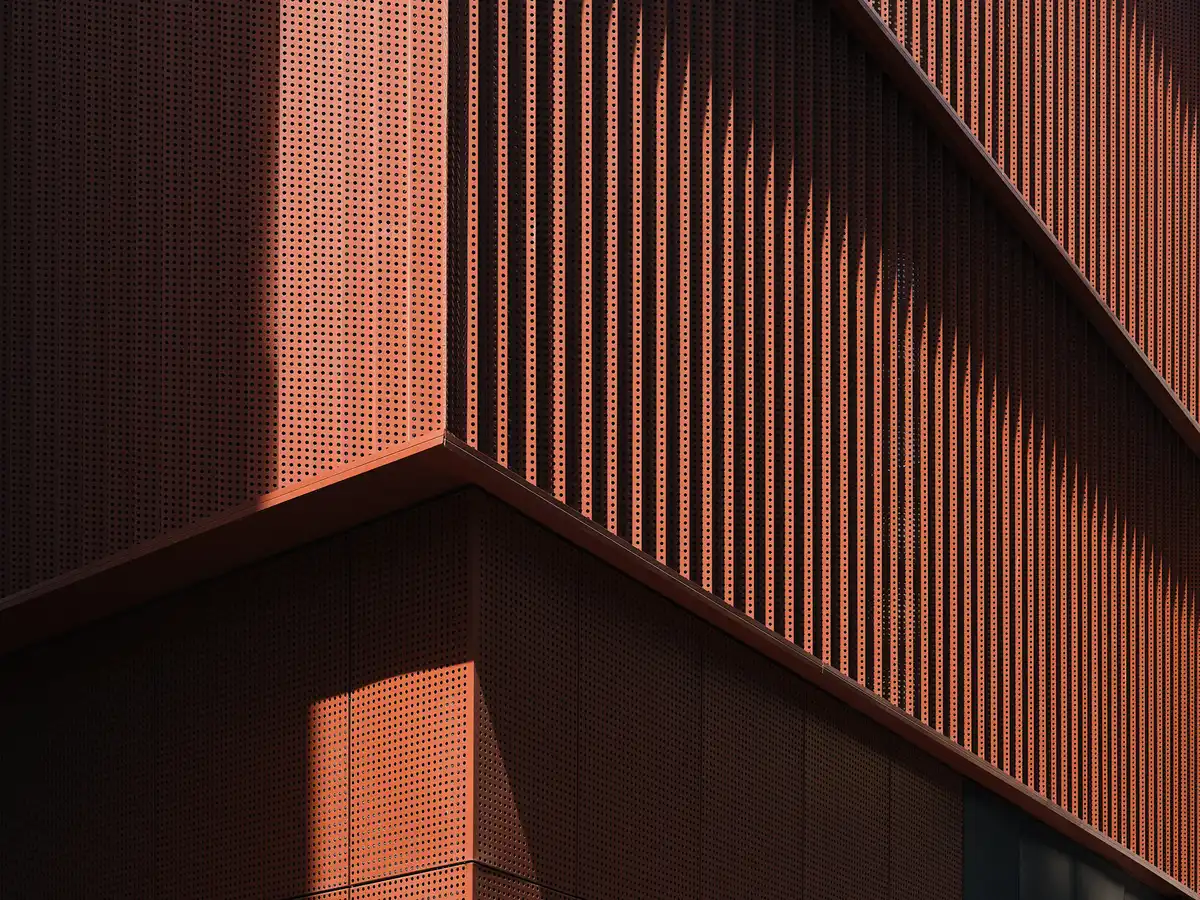
photo courtesy of SANATORIUM
Quartz Plaza, Istanbul, Turkey office building design
Architecture: Salon Alper Derinbogaz
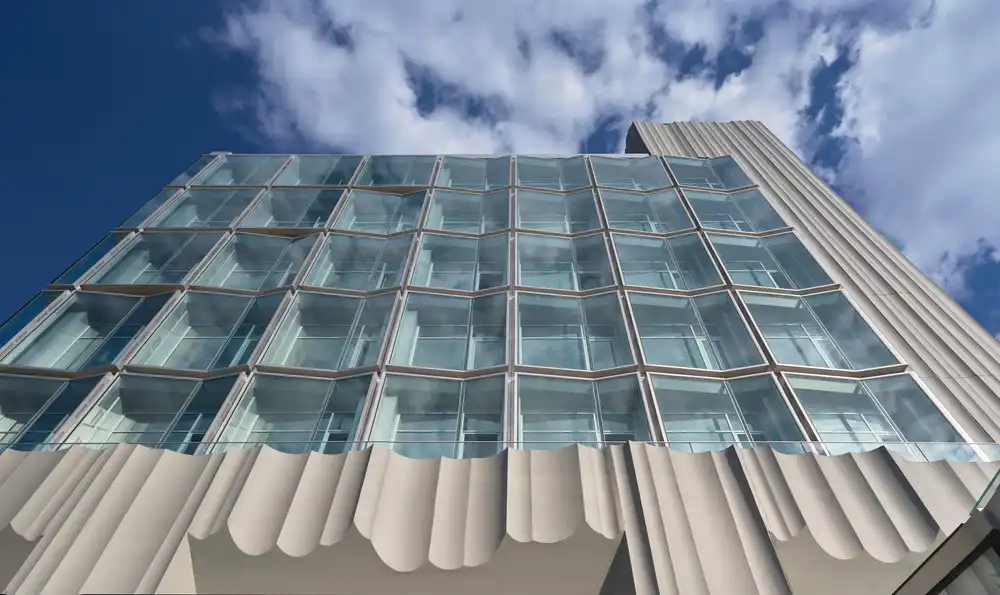
photo : Cemal Emden
Turkish Architect Offices – design office listings on e-architect
Istanbul Architect – design firm listings
Comments / photos for the Istanbul engineering structures: Turkey architecture challenges page welcome


