Water Damage in Mid-Atlantic Homes
14 September 2026
Water Damage in Mid-Atlantic Homes: What Architects, Builders and Owners Should Know About Restoration and Mitigation
Water is the most patient adversary a building will ever face. It rarely needs a hurricane. A slow condensate leak behind a wall, a patio graded toward the house, or a basement slab poured without a capillary break will do more cumulative damage over a decade than any single storm — and in the Washington DC, Maryland and Northern Virginia corridor, with its clay soils, high water tables and increasingly violent summer thunderstorms, the decade tends to be shorter.
This article is written for architects and builders, but it approaches the problem from the other end: what restoration contractors actually find when they open up a water-damaged home, how mitigation and restoration work, and which design decisions make the difference between a two-day dry-out and a full reconstruction.

Where the water actually comes from
Restoration crews see the same failure points repeatedly, and they rarely match what owners expect. Roof failures are a minority of claims. The recurring sources are:
Below-grade intrusion — hydrostatic pressure against foundation walls, failed or missing perimeter drainage, window wells with no outlet. In finished basements this is the single largest cause of loss.
Supply-line and appliance failures — washing machine hoses, water heaters, dishwasher and ice-maker connections, often located above finished space with no containment.
Envelope transitions — missing kick-out flashing, unsealed penetrations, deck ledgers fastened straight to sheathing.
HVAC condensate — attic and closet air handlers with clogged drains and no float switch.
None of these are dramatic, which is precisely the problem. By the time staining or odour appears, drywall, subfloor and framing have usually been wet long enough for mould to establish, and the job has moved from mitigation to restoration.

Mitigation versus restoration: the distinction that decides the cost
Professional water mitigation services cover the immediate work of stopping further damage: locating and isolating the source, extracting standing water, removing materials that cannot be dried in place, and bringing the structure to dry standard with commercial dehumidification and air movement. Restoration is everything after that — repairing or rebuilding what was lost.
The ratio between the two is set almost entirely by response time. A supply-line failure caught within hours, with professional water damage restoration in Washington DC crews on site the same day, is typically a drying job with minor drywall replacement. The same failure discovered after a long weekend is a demolition. For designers, the practical implication is that a home should be laid out so that water is noticed and stopped quickly — leak sensors, accessible shut-offs, mechanical rooms over unfinished space — rather than assuming it will never occur.
The first 48 hours
Moisture migrates fast in modern assemblies. Within 24 hours, gypsum board and OSB subfloor have wicked water well above the visible line. Between 48 and 72 hours, mould growth begins on organic surfaces. Insurance carriers know this, which is why claims documentation focuses so heavily on when the loss was discovered and when extraction started.
On the contractor side, emergency water removal is a defined process rather than a wet-vac and a fan: truck-mounted or high-capacity portable extraction, moisture mapping with pin and non-invasive meters and thermal imaging, removal of saturated carpet pad and the lower course of drywall, antimicrobial treatment of exposed framing, and daily readings until every material reaches its dry target. A crew that cannot show you moisture logs is not doing mitigation; it is doing clean-up.
Below grade: design for the flood you will eventually have
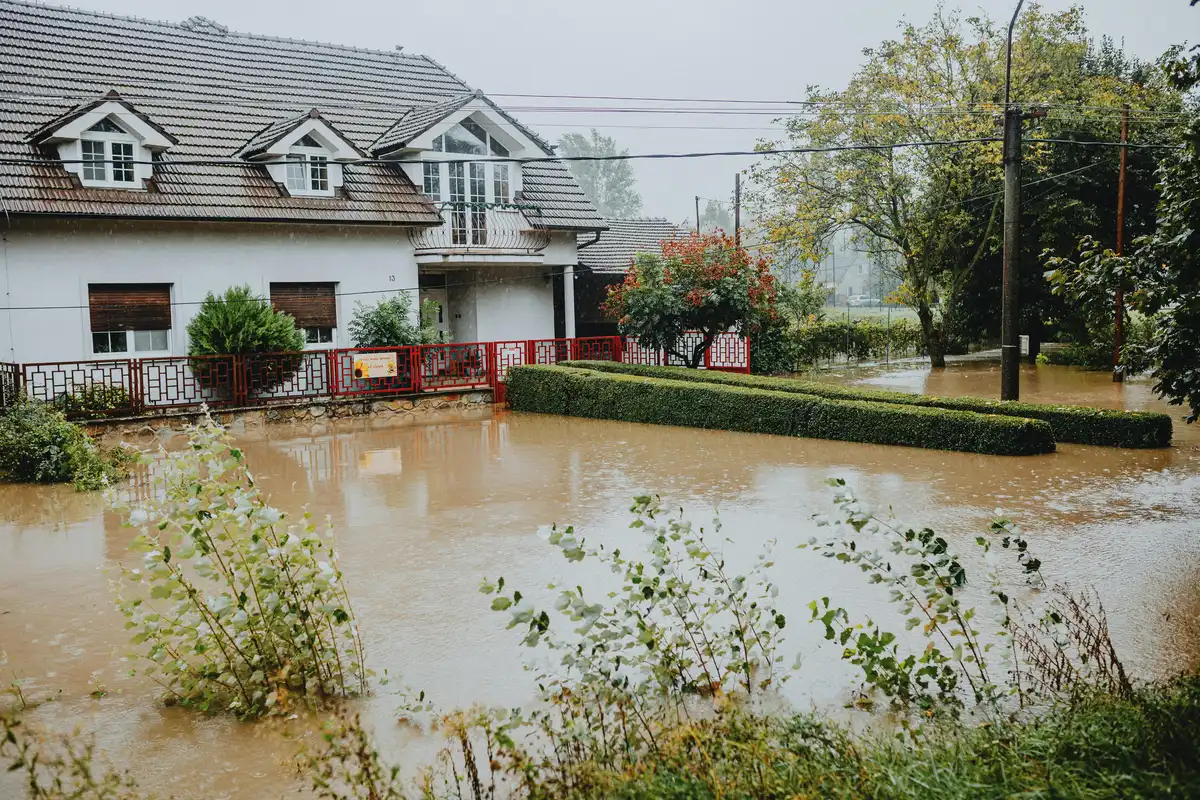
Finished basements are where the mid-Atlantic climate does its most expensive work. Good below-grade design assumes water will arrive and plans for a fast recovery: a dimple membrane or drainage board against the wall, a footing drain with somewhere to discharge, a sump with battery backup, and an interior assembly built from materials that tolerate a wetting — closed-cell insulation, cement board or paperless gypsum for the bottom course, floating floors over a vapour retarder rather than glued-down hardwood.
The difference this makes is stark. In a conventionally finished basement, a typical water damage restoration in Silver Spring job after a summer storm routinely means stripping the bottom two feet of every wall, discarding carpet and pad, and drying framing for a week. In a basement specified with inorganic, moisture-tolerant materials, the same event is often an extraction, a 48-hour dry-out and a cleaning — with the finishes left in place.
Flood damage from the outside: grading, gutters, discharge
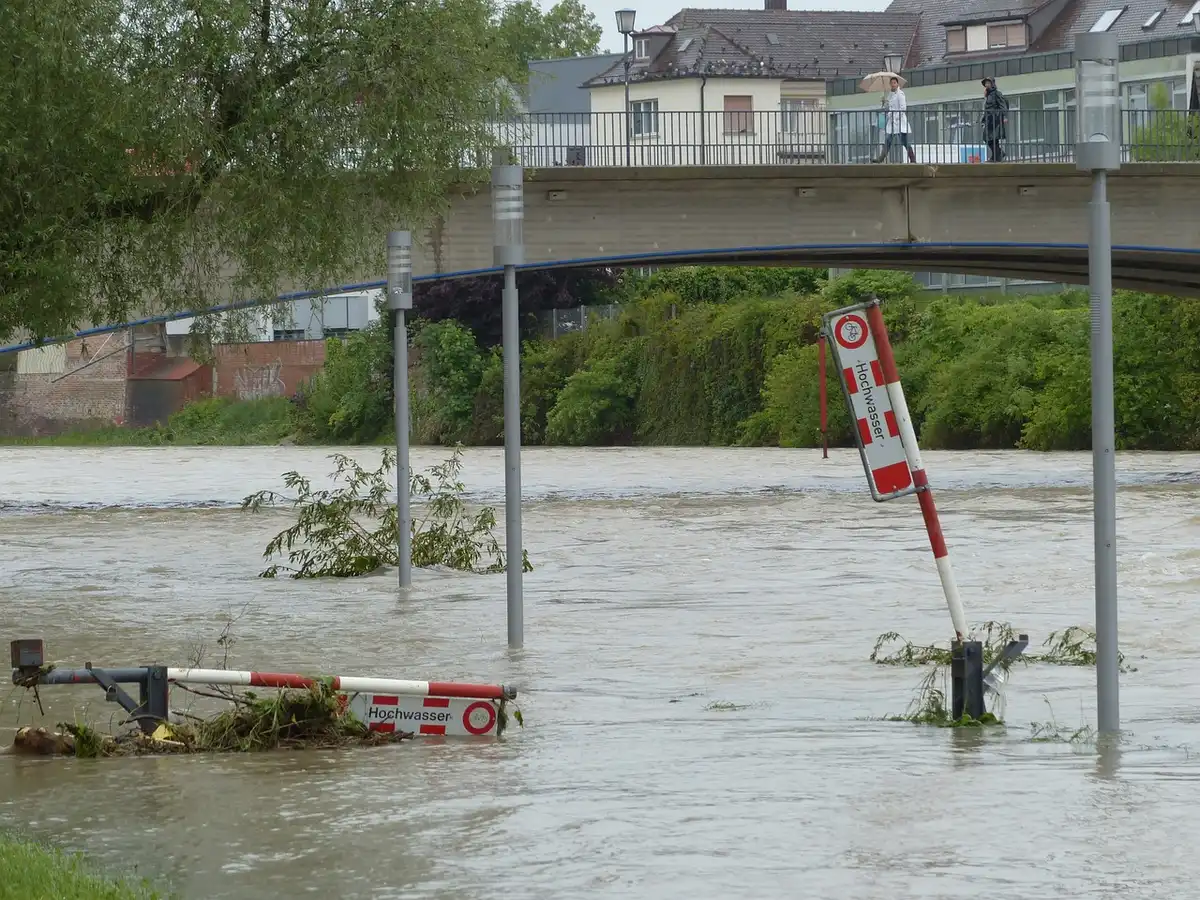
Surface water causes far more flood damage than groundwater in this region. The cheapest measure on any project is finished grade that falls away from the building — roughly 5 percent for the first three metres — and downspouts that discharge to daylight, a storm connection or a properly sized dry well, never within a metre of the foundation. Where the site will not allow it, swales and area drains belong on the drawings, not in the landscaper’s discretion. Every restoration contractor in the DMV has a list of homes they visit after each major storm because of a downspout.
Plumbing: containment, not just delivery
Locate water heaters, laundry and mechanical rooms on slab or over unfinished space wherever the plan allows. Where they must sit over finished rooms, specify drain pans plumbed to waste, leak sensors on every supply appliance, and an automatic whole-house shut-off valve on the main. Detail a clearly labelled, accessible main shut-off near the entry; the first job of any owner or responding crew is to stop the flow, and in too many homes the valve is behind storage in a crawlspace.
Materials that forgive
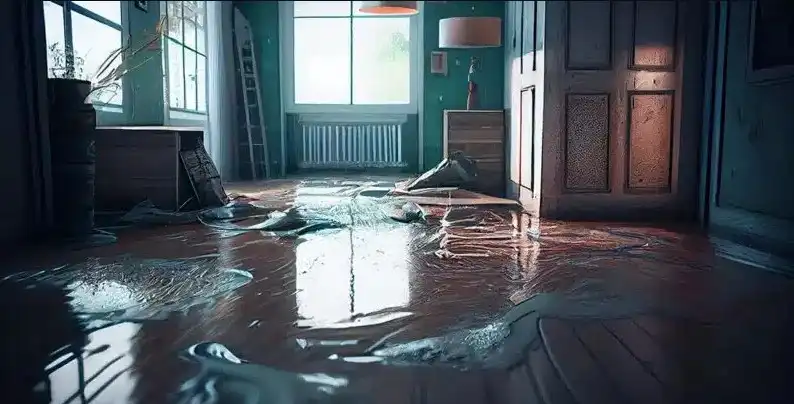
Finally, select finishes with recovery in mind. Engineered timber over a proper vapour retarder, paperless gypsum in wet zones, mould-resistant insulation and mineral-based paints all extend the window between a leak occurring and permanent damage — and they make mitigation faster and far less invasive when it is needed.
The takeaway
Water resilience is not a product added at the end of a project. It is a series of early decisions — grading, drainage, containment, detailing and material choice — made by people who understand what happens when those decisions are skipped. Architects who design with the restoration crew in mind deliver homes that age better, insure cheaper and, when the inevitable leak arrives, recover in days rather than months.
Comments on this guide to Water damage in homes restoration and mitigation article are welcome.
Water / Floods Articles
Water / Floods Posts
Water damage from leaks: construction lawsuits
Water damage cleanup and repair service
Water damage restoration professional tips
++
Architects and Architecture
Architects and Architecture by Type – architectural selection below:
Comments / photos for the Water damage in homes restoration and mitigation – property bad weather repair advice page welcome.