Sustainable Residential Architecture in Abu Dhabi: Estidama’s Edge
post updated 13 August 2026
13 August 2025
Abu Dhabi’s architectural identity is increasingly recognised for its commitment to sustainability. In recent years, architects, developers, and urban planners have been tasked with meeting ambitious environmental targets while maintaining the region’s reputation for design excellence. This balance has given rise to projects that combine energy efficiency, cultural relevance, and modern living standards in ways that set Abu Dhabi apart from other global capitals.
This shift is underpinned by the Estidama framework — the emirate’s comprehensive sustainability initiative. Meaning “sustainability” in Arabic, Estidama forms the basis of the Pearl Rating System, a mandatory set of environmental performance criteria for new buildings. In the Abu Dhabi real estate market, new developments are increasingly expected to combine luxury with measurable sustainability, meeting high benchmarks for energy efficiency, water use, and environmental impact.
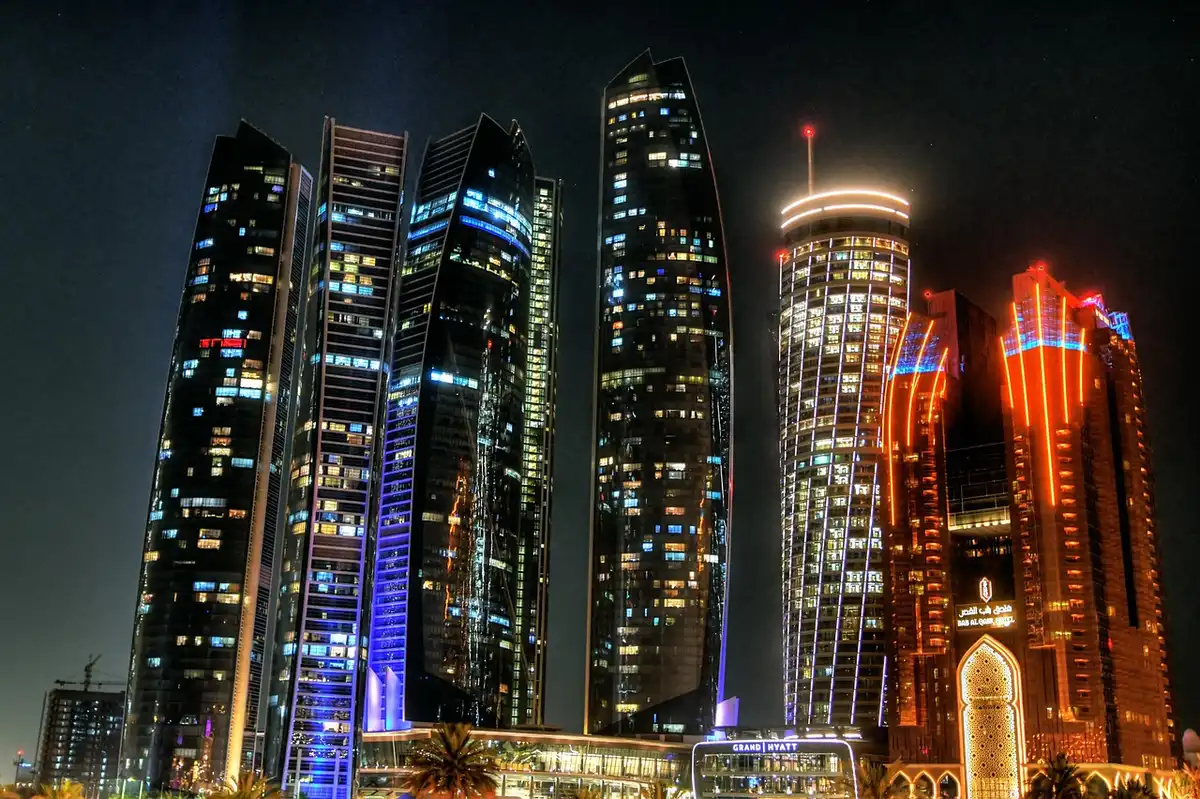
The Pearl Rating System and Its Impact
Introduced in 2010 by the Abu Dhabi Urban Planning Council, the Pearl Rating System evaluates developments across categories such as water usage, energy performance, materials sourcing, and community integration. All new buildings must achieve at least a 1 Pearl rating, with government-funded projects required to reach a minimum of 2 Pearls. The framework ensures measurable sustainability outcomes and influences design choices from the earliest planning stages.
For residential architecture, this translates into features such as passive cooling techniques, optimised building orientation, high-performance glazing, and integrated renewable energy systems. Landscaping is also approached strategically, with native and drought-tolerant plants reducing irrigation needs and supporting local biodiversity.
Designing for Climate and Culture
Abu Dhabi’s climate presents a unique challenge for architects: balancing the need for cooling in extreme heat with the desire to minimise energy consumption. Many Estidama-compliant homes incorporate shading devices, deep overhangs, and ventilated façades to reduce solar gain. Courtyards and atriums are often used to encourage airflow, drawing on traditional Gulf design principles while integrating modern materials and technologies.
Cultural context is another vital consideration. The city’s residential developments often feature layouts and communal spaces that reflect local customs, ensuring privacy and hospitality can coexist in a modern setting. This fusion of cultural respect and environmental responsibility has become a defining characteristic of high-quality residential projects in the capital.
Economic and Lifestyle Benefits
Sustainability in residential architecture offers tangible benefits to homeowners and investors. Energy-efficient systems reduce operational costs, while water-saving fixtures help lower utility bills in a region where water is a precious resource. For developers, Estidama compliance enhances a project’s marketability, appealing to both environmentally conscious buyers and those seeking long-term value retention.
From an investment perspective, sustainable homes are better positioned to meet evolving regulatory requirements, reducing the risk of costly retrofits in the future. This foresight is particularly important in a market where buyers are seeking properties that combine design excellence with practical performance.
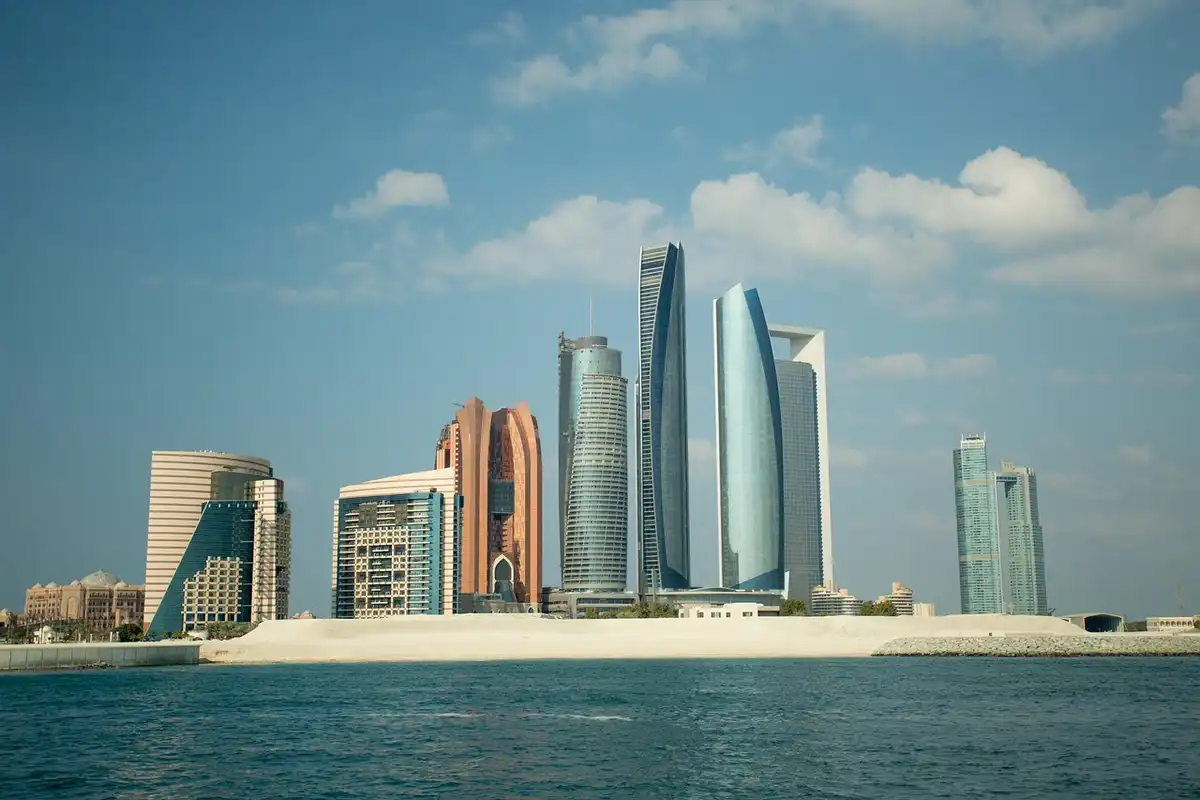
Notable Examples in the Capital
Several high-profile developments in Abu Dhabi demonstrate how Estidama principles are shaping residential design:
- Masdar City – A globally recognised sustainable urban community that combines mixed-use buildings with rooftop solar arrays, shaded pedestrian corridors, and advanced water recycling systems. Its building orientations and façades are designed to maximise natural cooling and reduce energy demand.
- Jubail Island – Positioned between Yas and Saadiyat Islands, this master-planned community integrates extensive mangrove conservation areas with low-density residential neighbourhoods. Homes are designed to achieve high Pearl ratings, using energy-efficient materials and smart water management solutions.
- Bloom Gardens – Located near the Corniche, this residential enclave blends Mediterranean-inspired architecture with Estidama-compliant construction methods, native landscaping, and efficient irrigation systems to minimise water use.
The Road Ahead
Abu Dhabi’s leadership in sustainable urban development is likely to accelerate in the coming decade. As global demand for environmentally responsible housing grows, the city’s combination of architectural innovation, cultural sensitivity, and environmental stewardship will continue to attract attention. The Estidama framework provides a consistent benchmark, ensuring that growth is managed with both quality and sustainability in mind.
For architects, developers, and investors alike, the capital offers a living laboratory for sustainable design in a challenging climate. By embedding environmental performance into every stage of the development cycle, Abu Dhabi is demonstrating that luxury and sustainability can complement each other — setting a precedent that other cities may well follow.
Comments on this guide to Sustainable Residential Architecture in Abu Dhabi: Estidama’s Edge, UAE, article are welcome.
Location: Dubai, United Arab Emirates – the Middle East, western Asia
Dubai Property
UAE Building Designs – recent United Arab Emirates selection:
Coca-Cola Arena
Architects: Populous
The Opus Hotel in Dubai
Design: Zaha Hadid Architects
+++
UAE Architectural Designs
New UAE Architectural Designs – selection:
Flamenca at The World Islands in Dubai
Reasons to purchase an apartment in Dubai Festival City
Resolve Real Estate Disputes in Dubai
Comments / photos for the Sustainable residential architecture in Abu Dhabi – UAE real estate advice page welcome