Smart Design Strategies for Urban Homes: Space Architecture
post updated 19 August 2026
August 19, 2025
Across London, Manchester and Bristol, every square metre has to do more. With sites scarce and new builds shrinking, design has shifted from adding rooms to upgrading performance. The goal: compact homes that live brighter, smarter and calmer.
Instead of pushing outward into limited land, the focus is shifting towards maximising underused space within existing housing stock. This includes adapting lofts, basements, and awkward corners into usable rooms. Strategic space reconfiguration ensures that every part of a property has a clear purpose.
The Architecture of Space: Smart Design Strategies for Urban Homes
There is also a sustainability dimension. Adaptive reuse of existing structures is less resource-intensive than building from scratch, reducing carbon emissions and waste. Sustainable architecture is not only an environmental imperative but also a way to preserve neighbourhood character.
Modern UK residential architecture must balance efficiency with liveability. Recent shifts in home design since the pandemic have shown the value of flexible layouts, allowing spaces to serve different functions as daily needs change. Whether for remote work, family living, or leisure, flexibility is now central to good design.
Ultimately, the challenge is to create spaces that are both practical and enjoyable. Homes that achieve this balance prove that size is less important than intelligent use of space.
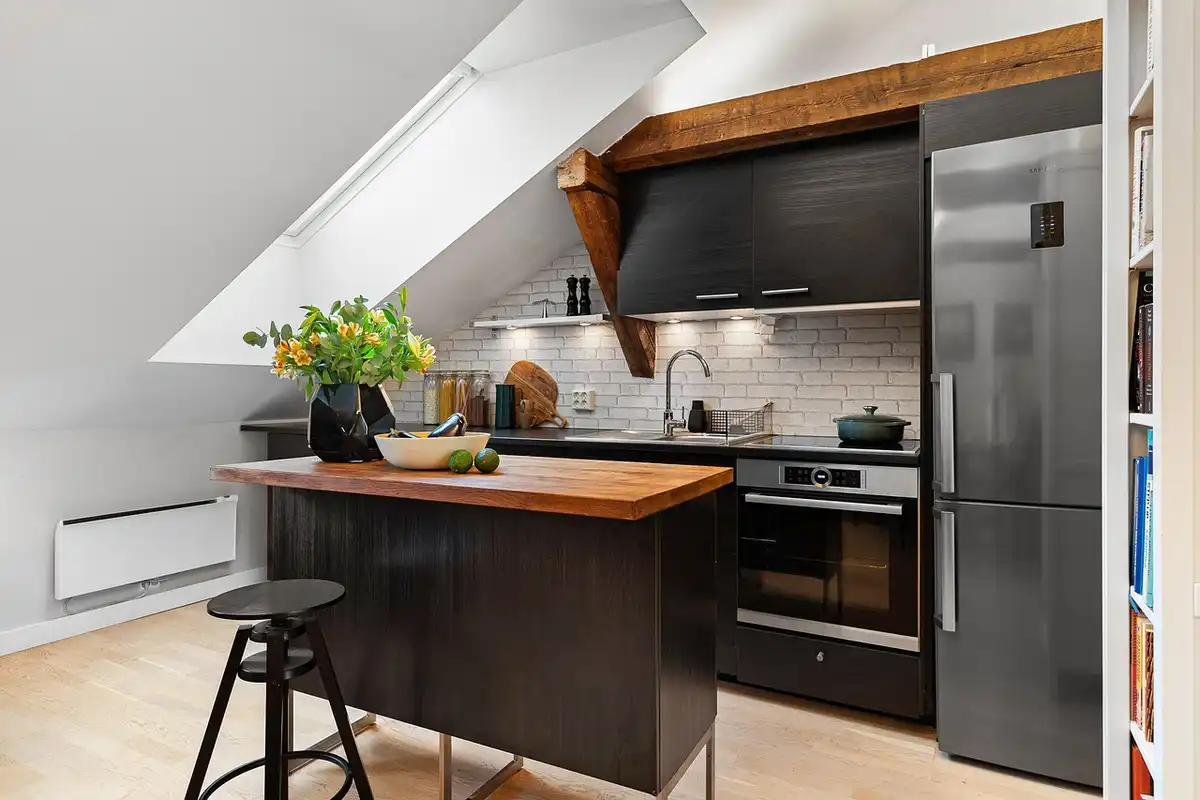
Architectural Minimalism Meets Practicality
Minimalism in architecture has evolved from a visual style into a practical response to urban density. By stripping away unnecessary elements, small homes can feel more open, adaptable, and easier to navigate. This approach also makes maintenance simpler and often more sustainable.
As Architizer’s guide to minimalism explains, the approach reduces buildings to essential forms, clean lines, open plans, natural light and material honesty, creating clarity and flexibility in compact urban homes.
In London boroughs such as Hackney, Ealing, Kensington or Islington, smart renovation projects often begin by removing non-structural walls to create a smoother flow between rooms. Integrated storage and multi-use furniture reduce clutter, keeping spaces adaptable for various needs.
Retaining period features while simplifying the overall palette creates a home that feels warm and distinctive. Architectural lightness, using pale tones, slim profiles, and open sightlines, adds to the sense of space.
This style supports lifestyle-focused design. Homes are shaped around how people actually live, rather than around decorative trends. The result is an interior that is functional, calm, and welcoming.
As part of sustainable architecture, minimalism reduces unnecessary materials and focuses on durable, adaptable elements. This makes it easier to update spaces without large-scale demolition in the future.
Minimalism in practice is less about empty rooms and more about intelligent choices. A well-placed skylight can replace three lamps. A wall of built-in joinery can do the work of five separate cupboards. The best projects prove that simplicity isn’t compromise, it’s strategy. When applied with care, minimalism doesn’t strip character away; it creates homes that breathe, adapt, and age well alongside the people who live in them.
Going Up, Not Out: Vertical Expansion Tactics
In cities where land is scarce, vertical living is an effective way to gain more space. By adding floors or converting attics, homeowners can create additional rooms without altering the footprint of the building. This approach is particularly valuable in high-density urban areas with strict planning limits.
One of the most efficient strategies is a smart loft conversion. These projects turn previously unused roof spaces into practical living areas, from bedrooms to home offices and studios. Roof windows and skylights enhance architectural lightness by filling these spaces with natural light.
Vertical expansion also plays a role in adaptive reuse. Older apartment buildings in London and Leeds have gained lightweight rooftop structures, creating new homes without consuming extra land. These additions often form part of wider smart renovation strategies.
For families, the appeal is clear. Staying in a familiar neighbourhood while increasing living space avoids the disruption and expense of moving. In cities with high property prices, vertical expansion can be a more cost-effective solution.
Success relies on careful planning and ensuring the structure can support the changes. Expert advice ensures that new levels blend with the existing architecture while meeting all safety and regulatory requirements.
Extending Horizontally: Smart Ground-Level Expansions
Not every home has the structural capacity to build upwards. In dense boroughs of London, ground-level extensions remain one of the most effective ways to add usable space. Side-return kitchens, rear glass-box additions, and even small garden structures can transform the way a home functions without requiring a full loft conversion.
The key is proportion. Poorly designed extensions can swallow outdoor areas or feel disconnected from the rest of the home. Thoughtful layouts, however, create a natural flow between interior and garden, opening up compact plots while still preserving light and air.
This is where horizontal growth overlaps with lifestyle-focused design. A well-placed extension not only adds square footage but also sets the stage for stronger indoor–outdoor connections, paving the way for the biophilic principles discussed in the next section.
Blending Indoors and Outdoors
Lifestyle-focused design increasingly seeks to blur the boundaries between indoor and outdoor space. Biophilic principles encourage natural light, ventilation, and greenery to improve wellbeing in urban settings. Even in compact homes, these elements can be incorporated with thoughtful planning.
In boroughs like Camden and Richmond, glass extensions and garden rooms have become popular. They create transitional zones that connect interiors with small gardens or courtyards, making even limited outdoor areas feel significant.
As Forbes highlights in its overview of indoor–outdoor living trends, architecture is increasingly shifting toward flexible thresholds, spaces that can expand or contract depending on the season. Large pivot doors, frameless glazing, and outdoor kitchens are no longer reserved for luxury estates; they’re becoming part of urban renovations where every square metre counts. These strategies add visual drama while also reshaping the way families experience their homes, creating a more natural flow between garden and living room.
The changes in how people use their homes after the pandemic have accelerated interest in outdoor spaces. Retractable glazing, insulated garden structures, and weather-resistant materials make these areas usable year-round, regardless of the UK climate.
Balconies and roof terraces are also being transformed. Planters, vertical gardens, and built-in seating turn them into functional spaces rather than decorative extras. These features also support sustainable architecture by encouraging biodiversity in dense neighbourhoods.
In the UK’s variable climate, planting schemes can be designed for year-round interest. Evergreen shrubs, climbing plants and sheltered seating areas ensure that even small terraces feel inviting in winter. For summer, retractable awnings and light-permeable pergolas provide shade while still allowing natural light to filter indoors.
These features not only support designs centred on how people live but also promote biodiversity in urban density zones. Native species can attract pollinators, while green roofs and walls can help regulate indoor temperatures. When combined with architectural lightness and strategic space reconfiguration, these outdoor connections become a valuable part of daily life.
Smart Materials, Smarter Layouts
The choice of materials is central to sustainable architecture. Reclaimed timber, recycled composites, and low-VOC finishes provide durability while reducing environmental impact. These materials also adapt well to different design styles.
Smarter layouts make the most of limited space. Open-plan areas that can be divided when needed, sliding partitions, and modular furniture support strategic space reconfiguration. This adaptability is especially valuable in urban homes where needs may change quickly.
Professional construction companies like Innovate Builders deliver architectural and renovation expertise across London, specialising in space-efficient design, heritage-sensitive upgrades and sustainable building solutions for modern urban homes. Their projects show how intelligent planning can improve both function and quality of life.
Designing with adaptability in mind also reduces future costs. Spaces that can be reconfigured without structural work allow homeowners to adjust layouts as their lifestyles evolve.
The aim is to achieve architectural lightness alongside practical efficiency. This creates homes that are comfortable, functional, and sustainable over the long term.
Emerging technologies are also shaping how smart layouts are executed. Integrated storage systems, underfloor heating solutions that free up wall space, and energy-efficient glazing help create interiors that feel larger and perform better.
Advances in prefabricated elements allow for faster installation with less waste, which is increasingly important in dense London boroughs where time and disruption carry significant costs. For investors and homeowners alike, these innovations demonstrate that sustainability and practicality can go hand in hand, enhancing both comfort and long-term asset value.
Heritage Meets Innovation
UK residential architecture includes a significant proportion of period properties. Renovating these homes often involves balancing historic preservation with modern performance standards. Smart renovation in these contexts demands sensitivity and technical expertise.
Restoring original features while introducing energy-efficient systems creates a blend of heritage and sustainable architecture. Adaptive reuse ensures that historic homes remain functional in contemporary life without losing their character. This balance between old and new is not just a design problem but a mindset. As CIBSE has highlighted, inspiring younger generations to see heritage as a driver of innovation ensures that architectural traditions are preserved while adapting to modern needs.
In conservation areas, materials and techniques must often match the original. This requires specialist craftsmanship alongside modern building knowledge. Successful projects achieve compliance while delivering modern comfort.
Cities such as Bath and Edinburgh offer strong examples. Interiors are reconfigured to improve circulation and lighting, while façades remain untouched. This approach preserves the visual fabric of the neighbourhood.
When integrated thoughtfully, they can create homes that are both deeply rooted in history and ready for the future. Achieving this balance between respect for the past and forward-thinking design is equally important when rethinking how spaces are arranged and experienced in the home.
Strategic space reconfiguration can make a home feel larger without altering its footprint. Lighting, ceiling height, and finishes all play a role in shaping perception.
Natural light remains the most effective tool for enhancing architectural lightness. Enlarged windows, skylights, and reflective surfaces bring daylight into the deepest parts of a home.
Artificial lighting has advanced significantly. Layered solutions combine ambient, task, and accent lighting to suit different activities. These systems also highlight architectural features and improve usability.
Ceiling height, even when fixed, can be emphasised visually. Vertical elements, tall shelving, and colour gradients draw the eye upward, creating a sense of greater volume.
Mirrors, light-toned finishes, and glass partitions contribute further to the illusion of space. Together, these techniques offer practical, low-impact ways to improve urban homes.
Design Adaptations Across London Boroughs
London offers diverse examples of vertical living, adaptive reuse, and lifestyle-focused design. In Hackney, warehouse conversions retain industrial character while providing flexible layouts for modern needs. These projects often combine mezzanine levels with open-plan living areas.
In Islington, split-level mezzanines and light wells have been used to maximise underused space. This approach improves natural light penetration and creates dynamic interior volumes.
Camden has embraced garden studios as part of post-pandemic home adaptation. These compact structures provide workspace without compromising garden space, reflecting lifestyle-focused priorities.
In Southwark, rooftop extensions on council housing blocks have delivered additional homes without building outward. This form of vertical living makes use of structural capacity while maintaining community space at ground level.
Kensington and Chelsea showcase heritage-sensitive smart renovation. Properties preserve their historic façades while interiors are adapted with strategic space reconfiguration to suit contemporary living.
In Lambeth, adaptive reuse of disused commercial buildings has created multi-level apartments with generous communal gardens. These projects demonstrate how smart renovation can deliver both private and shared amenities without increasing the building footprint.
Tower Hamlets has focused on maximising underused space in high-rise developments. Strategic space reconfiguration within existing flats, including the addition of flexible partitions, has improved functionality without requiring residents to move. These initiatives show that vertical living can be enhanced through thoughtful, small-scale interventions.
What Homeowners Should Consider Before Renovating
Smart renovation projects require careful preparation. Budget, structural limits, and planning rules must be considered from the outset to avoid delays.
Budgeting, structural limits, and planning permissions are the obvious first steps, but they’re rarely the whole story. A practical guide like Checkatrade’s renovation checklist shows how even small oversights, from waste removal to site access, can derail timelines and add costs.
In heritage properties, permitted materials and methods may be restricted. Understanding these requirements early helps ensure compliance and smooth approvals.
Construction in dense urban areas presents logistical challenges. Noise regulations, limited access, and neighbour agreements can all affect timelines. In busy hubs like Manchester, working with an acoustic consultancy to monitor site noise in real time can help you avoid delays and maintain positive neighbour relations.
Designing with future flexibility in mind supports long-term value. Spaces that adapt easily to changes in household size or lifestyle reduce the need for future building work.
Working with an experienced architect helps homeowners navigate these complexities smoothly. Experienced architects can align design ambitions with technical and regulatory realities.
Planning permission timelines in the UK can vary widely depending on location and project complexity. In conservation areas, additional heritage reviews can lengthen the process. Early submission and clear documentation are therefore essential.
Cost control is equally critical. Fixed-price contracts, staged payments, and contingency budgeting can prevent financial strain during construction. For those undertaking smart renovation in older properties, setting aside funds for unforeseen structural repairs is a prudent step.
Building Smarter, Not Just Bigger
The challenge of urban living is not only about acquiring more space but about using existing space with greater intention. In areas of high urban density, this means prioritising design strategies that make every square metre work harder. Homes that embrace this principle often feel more generous and adaptable, even without physical expansion.
From loft conversions to biophilic extensions, the most effective projects combine technical precision with home layouts shaped around everyday life. They take into account the limitations of dense city settings while enhancing the way residents experience their homes. This balance of practicality and beauty ensures that even modest footprints can support a rich, versatile way of living.
Heritage and innovation can coexist when guided by smart renovation. Retaining original features while introducing sustainable architecture creates homes that are deeply connected to their history yet fully equipped for modern needs. This approach also supports adaptive reuse, breathing new life into buildings that might otherwise fall into disrepair.
Smart Design Strategies for Urban Homes Conclusion
Sustainability underpins these strategies. Adapting and improving existing structures reduces environmental impact and makes better use of underused space. The focus is on vertical living, strategic space reconfiguration and solutions that deliver architectural lightness, keeping interiors airy, open and adaptable.
For UK residential architecture, building smarter is about valuing design intelligence as highly as square footage. Post-pandemic home adaptation has shown that flexible layouts, efficient storage, and multi-purpose spaces can significantly improve urban living. With this mindset, urban homes can remain resilient and sustainable while continuing to meet the evolving needs of those who live in them, now and in the generations ahead.
Comments on this The architecture of space: smart design strategies for urban homes article are welcome.
Homes
Home Designs
Los Angeles home architecture design
Exterior home components that need more attention
++
Buildings
Residential Architecture Articles
Comments / photos for the Smart design strategies for urban homes page welcome