
Obsolete Paris Offices Are Undervalued: Nick Millican
19 January 2026
The Brown Discount: Why Nick Millican Is Betting That Obsolete Paris Offices Are Undervalued
Under France’s new regulations, the 1970s tower nobody wants may be worth more than the 2015 building everyone’s trying to sell
Here’s a counterintuitive proposition: in Paris today, a dated 1970s office tower in La Défense may represent a better investment than a sleek 2015 building in the same district. The older building is priced like a liability. The newer one is priced like an asset. But under France’s tightening regulatory regime, both face the same compliance deadline—and only one has room for value creation.
This is the thesis behind Nick Millican‘s decision to expand Greycoat Real Estate into Paris. While most investors see La Défense’s 600,000 square meters of vacant, environmentally non-compliant office space as a problem, Millican sees inventory.
The Maths Behind the Brown Discount
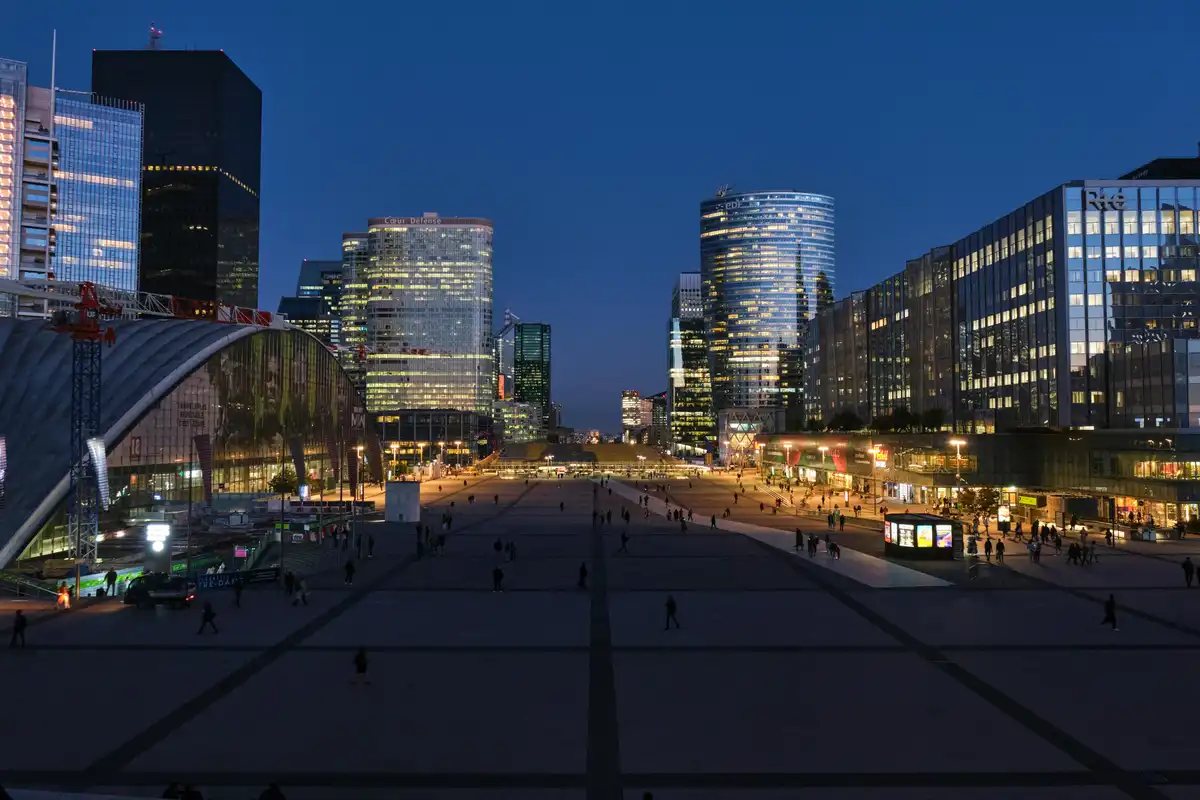
The Paris office market has bifurcated sharply. In the CBD, vacancy sits at 2-4.7%. In La Défense, it’s 15-15.7%. Northern suburbs hit 20%. Analysts have started calling this divergence a “brown discount” rather than a green premium—the problem isn’t that sustainable buildings command higher prices, it’s that non-compliant buildings are being marked down aggressively.
The discount is substantial. Studies estimate 10-20% asset devaluation for buildings that fail to meet France’s Décret Tertiaire requirements. With 57% of Paris office stock currently below environmental standards, that’s a lot of devaluation concentrated in a short window.
But here’s what the market may be mispricing: the cost of upgrading a 1970s building to compliance isn’t necessarily higher than upgrading a 2015 building. In some cases, it’s lower. Older buildings often have simpler mechanical systems, more structural flexibility, and fewer integrated technologies that require wholesale replacement. The renovation playbook is well-established. The 2015 building, meanwhile, may have systems that are dated enough to need replacement but recent enough that the owner hasn’t written them off.
Nick Millican’s Arbitrage
Millican has spent a decade at Greycoat refining exactly this arbitrage in London. The model: acquire buildings trading at a discount due to obsolescence, invest in comprehensive refurbishment, and exit at valuations reflecting the upgraded environmental credentials. The margin between acquisition price and exit value is where Greycoat makes its returns.
“There’s good buildings in desirable locations with modern environmental performance that are doing very well, and rents are actually going up,” Millican has observed of the London market. “Then there are properties that aren’t really fit for purpose and are in the wrong location that probably need to be repurposed into something else.”
The key insight: the middle category—buildings in good locations that aren’t fit for purpose but could be—represents the opportunity. Paris has plenty of these. La Défense towers from the 1970s-1990s sit on excellent transport links, minutes from the CBD. They’re not in the wrong location. They’re just in the wrong condition.
Why French Regulation Amplifies the Opportunity
France’s regulatory environment is more aggressive than the UK’s on embodied carbon—and this works in favour of refurbishment. The RE2020 regulation makes France the first country with mandatory embodied carbon requirements. New construction must meet thresholds that tighten from 640-740 kg CO₂/m² today to 415 kg CO₂/m² by 2031.
Paris’s PLU Bioclimatique, adopted in November 2024, goes further. It establishes renovation as “the new norm” and demolition as “the exception.” The regulation explicitly exempts energy-improvement works from its most stringent requirements—a carve-out designed to encourage exactly the kind of refurbishment Millican specialises in.
The implication: demolishing a 1970s tower and building new triggers the full weight of embodied carbon requirements. Refurbishing it doesn’t. For Millican, who has argued that “the most sustainable building is often the one that already exists,” this regulatory architecture validates the entire thesis.
The Compliance Cliff
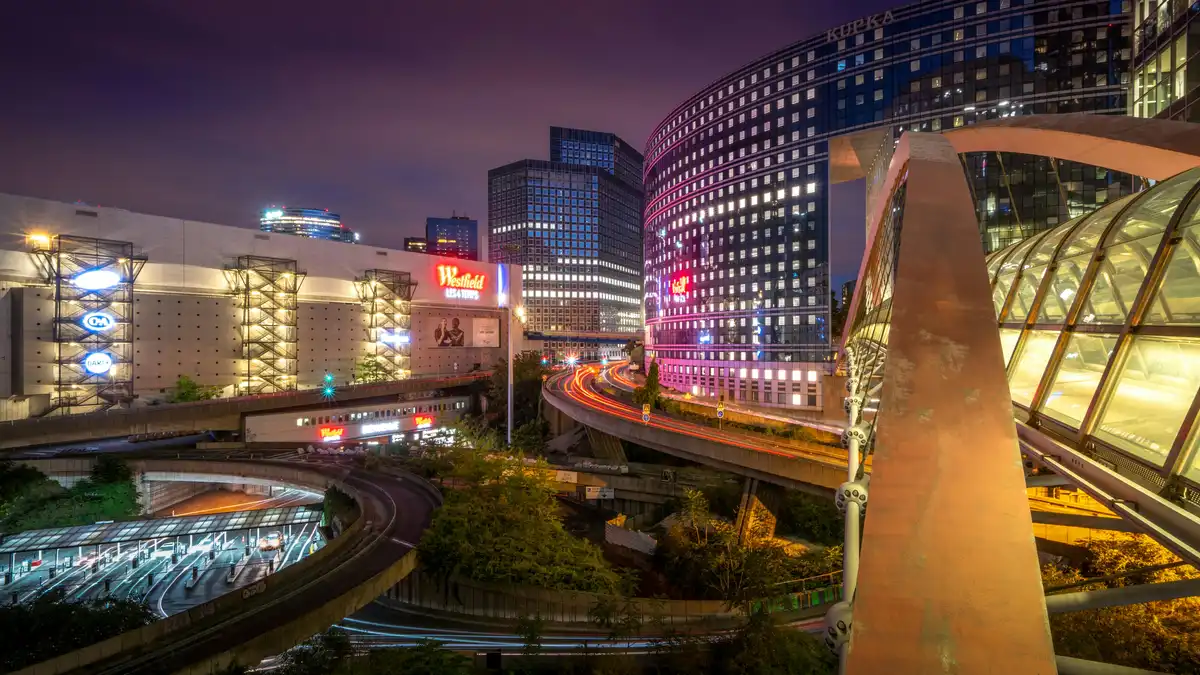
The Décret Tertiaire creates hard deadlines. All commercial buildings over 1,000 square meters must cut energy consumption 40% by 2030, 50% by 2040, and 60% by 2050. Non-compliance means €7,500 fines per building and public “name and shame” disclosure. France’s DPE energy ratings add further pressure: G-rated properties face rental bans from January 2025, F-rated from 2028, E-rated from 2034.
This creates a compliance cliff. Owners of non-compliant buildings face a choice: invest in upgrades, sell at a discount, or hold assets that become unlettable. Many are choosing to sell. That’s creating the buyer’s market Millican is entering.
“I think at the minute we feel that sentiments have led to an overcorrection of office prices in some areas,” Millican noted in a recent interview. “Some stuff is probably cheaper than it should be if you take a medium-term context.”
Millican’s Paris Team
To execute the strategy, Millican recruited practitioners who know the Paris market’s specific complexities. Arnaud Malbos, now heading Greycoat France, spent 17 years at CDPQ/Ivanhoé Cambridge and led projects including the DUO towers and Cœur Défense—160,000 square meters of precisely the kind of large-scale repositioning Greycoat targets. Semih Bayar Eren joined as Directeur Général in September 2025, bringing legal expertise honed at Latham & Watkins and Ivanhoé Cambridge. Barthélemy Pradinas joined earlier this month as Investment Associate, bringing substantial experience in real estate investment, underwriting and asset management across multiple European markets
The playbook mirrors London. At 20 Finsbury Dials, Greycoat and Goldman Sachs Asset Management are converting a dated office building into a BREEAM Outstanding, EPC A, WELL Platinum asset. The transformation demonstrates what’s possible when refurbishment expertise meets capital willing to take a medium-term view.
The Bet
Nick Millican is making a specific wager: that Paris’s brown-discounted office buildings are oversold. That the gap between their current trading prices and their post-refurbishment values exceeds the cost of transformation. That regulatory pressure will continue forcing sellers to the market while tenant demand for sustainable space remains strong—BREEAM-certified buildings in Paris command up to 24.9% rent premiums and show 8% higher occupancy.
It’s not a risk-free proposition. Construction costs have risen with inflation. Interest rates remain elevated. The mixed-use requirements in Paris’s PLU Bioclimatique add complexity to large projects. But for a developer whose entire model is built on the premise that obsolete buildings represent mispriced optionality, Paris in 2025 looks like fertile ground.
The 1970s tower that nobody wants today may be the sustainable, premium-rent asset that everyone wants in 2028. Nick Millican is positioning Greycoat to be the one who makes that transformation happen.
Comments on this guide to Obsolete Paris offices are undervalued article are welcome.
Structural Design & Building Construction
Building Structure & Construction Posts

Integrating humans with AI in structural design
Modular Building and Prefabricated Construction
7 Tallest skyscrapers under construction
++
Buildings
Architecture Articles
Comments / photos for the Obsolete Paris offices are undervalued page welcome.


