
How Miami’s Architecture Evolved From Art Deco to Glass Towers
October 6, 2026
Miami is a young city, yet its skyline tells a long story. Within a few miles, you can see pastel hotels from the 1930s, curved resort buildings from the 1950s, and glass towers that rose in the decades after.
Each style answered a different question. How do you rebuild after a crash? How do you design for leisure? How do you build to survive a hurricane? The answers changed the look of the city.

photo © Adrian Welch
Miami Art Deco Architecture
The first big chapter belongs to South Beach. Most of the Art Deco buildings in this region went up in the 1930s and early 1940s.
The timing of the build was not an accident. Miami’s land boom collapsed in 1925, and the 1926 hurricane did heavy damage. Then the Great Depression arrived. Builders had little money, but they still wanted optimism on the street.
Art Deco delivered that on a budget. Architects used smooth stucco, rounded corners, and “eyebrow” overhangs that shaded the windows. Many hotels were small, low-rise, and painted in soft colors. Designers also borrowed the Streamline Moderne look, which suggested speed and progress.
Henry Hohauser is one of the best-known names from this period. His work includes the Colony Hotel (1935) and Park Central (1937). Other architects, such as L. Murray Dixon and Albert Anis, added to the district as well.
These buildings might have been lost. By the 1970s, many were run down, and demolition was a real risk. Barbara Baer Capitman led the push to save them. In 1979, the Miami Beach Art Deco District was listed on the National Register of Historic Places, with about 800 contributing buildings. According to the Miami Design Preservation League, it became the nation’s first urban twentieth century historic district.
That listing changed South Beach. Owners could use tax benefits for restoration, and the neighborhood slowly started transforming.

photo © Adrian Welch
MiMo: Miami Modern Architecture
After World War II, tastes shifted. The country was prosperous, cars were everywhere, and Miami Beach was becoming a major resort destination. Architects wanted something bolder than Deco.
The result is called MiMo, short for Miami Modern. It ran from the late 1940s through the 1960s. According to the City of Miami Beach, its signature features include curved rooflines, decorative “breeze blocks,” large glass walls, and flat roofs with wide overhangs.
Morris Lapidus is the architect most linked to this architecture style. His Fontainebleau opened in 1954 on Collins Avenue. The Eden Roc followed in 1956. Both were built to impress guests from the moment they walked in.
The Fontainebleau is known for its sweeping curve and its “staircase to nowhere.” Critics did not always approve at first. Over time, opinions changed. In 2007, the American Institute of Architects ranked the hotel 93rd on its America’s Favorite Architecture list. The building was added to the National Register of Historic Places in 2008.
MiMo matters because it was designed for a specific way of life. Open lobbies, indoor and outdoor flow, and generous glass all fit Miami’s climate. Those ideas still show up in new buildings today.

Hurricane Andrew and Stronger Building Codes
The next big shift was not about style. It was about safety.
According to a review of the storm’s code impact published by US Glass Magazine, Hurricane Andrew destroyed more than 63,000 homes in South Florida and damaged about 100,000 more in 1992. The storm also exposed a weak system. Florida had more than 400 local building codes at the time, and many were loosely enforced.
Change came in steps. In 1994, the South Florida Building Code was adopted, with tougher roofing standards and impact-resistant windows or shutters. In 2002, the statewide Florida Building Code replaced all of the local codes.
Miami-Dade and Broward are the only two counties in Florida that fall under the High-Velocity Hurricane Zone rules. Those rules call for the most demanding testing of windows, doors, and roofing.
You can see the results in everyday design. Windows are now tested for flying debris. Roof connections are stronger. Balconies and glass walls have to meet specific wind standards. Buildings that once leaned on style now lean on engineering too.

Miami Glass Towers and Condo Design
The skyline most people picture today in iconic Miami came later. As Brickell grew into a financial district, residential towers followed the offices.
Many of these buildings use floor-to-ceiling glass, deep balconies, and shared amenity decks. The goal is similar to MiMo. Bring the outdoors in, and give every unit a view.
Some towers made a name through bold design. Arquitectonica’s Atlantis on Brickell Avenue, finished in 1982, is a well-known example. It cut a large open space into its facade and placed a palm tree inside it. Architects across the city have kept pushing in that direction, treating the tower as a piece of public design and not just a stack of apartments.
Newer towers also reflect the codes covered above. Glass is rated for impact. Structures are built for high winds. Parking and utilities often sit above flood levels. The glossy look hides a lot of engineering.
Condos Across Miami’s Building Eras
One result of this history is variety. A buyer in Miami can choose a small Deco-era building, a mid-century complex, a 1980s tower, or a newer high-rise. Each has a different feel and a different set of trade-offs.
Older buildings often offer more character and sometimes larger floor plans. Newer ones usually bring modern systems, amenities, and stronger wind ratings. Browsing current Miami condos for sale by building and neighborhood is a quick way to compare both. Neither is automatically better. It depends on the building’s condition and on what the buyer values most.
That is why browsing helps. A list of condos for sale in Miami under $500,000 shows how wide the range is. Some listings sit in older buildings with a distinct style. Others are in towers from different decades. Looking at several side by side makes the architectural differences much easier to see.
When comparing buildings, a few checks are worth making:
- Age and style: Know which era the building comes from and what that means for its systems.
- Condition: Ask about recent inspections and major repairs.
- Windows and roof: Check whether they meet current wind standards.
- Location: Elevation and distance from the water affect both comfort and costs.
These questions apply whether the building is a 1930s walk-up or a recent glass tower.

What Miami’s Buildings Show
Look at the three eras of Miami together, and a clear pattern appears. Art Deco responded to hard times with optimism. MiMo responded to prosperity with confidence. The modern tower responded to storms and density with engineering and glass.
Each wave kept parts of the one before it. Pastel color, curved lines, and open outdoor space still appear in the new design. The city has not replaced its past so much as layered on top of it.
It means a Miami address comes with a design story. Platforms like Hometrino let buyers browse Florida properties by city and budget, alongside making different filters available, which makes it easier to compare those stories side by side.
Miami will keep changing. New towers will rise, and older buildings will be restored or replaced. But the main thread is clear. The best buildings here fit the climate, serve the people inside, and leave the street a little more interesting than they found it.
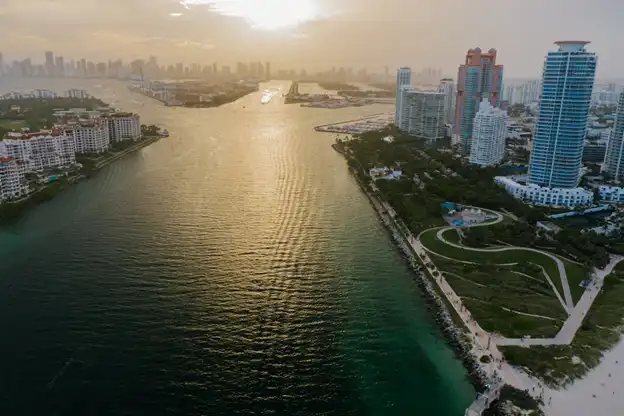
image source : pexels.com
Comments on this guide to How Miami architecture evolved from Art Deco to glass towers article are welcome.
Miami Architectural Designs
Miami Building Designs – architectural selection below:
Miami Architecture Designs – chronological list
La Clara Apartments in West Palm Beach, Florida
Norton Museum of Art, West Palm Beach
++
Miami Real Estate
Three Miami residences redefining luxury living
Four of Miami’s Most Luxurious Residential Developments
Guide to Miami Modernist architecture
Miami’s Most Luxurious Real Estate Projects
Comments / photos for the How Miami architecture evolved from Art Deco to glass towers, Florida, USA, page welcome.


