Furniture as Spatial Infrastructure in Contemporary Housing
December 30, 2025
In discussions around contemporary housing, references to high-end indoor furniture Los Angeles increasingly appear not as stylistic signals, but as shorthand for how furniture is expected to operate within space. In many recent residential projects, furniture is no longer treated as a movable layer applied after the fact. It is understood as a spatial component that helps complete the architectural system.
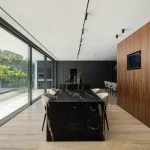
This shift is most evident in open-plan houses. As internal walls recede, the plan becomes less prescriptive. Rooms no longer declare themselves through enclosure, and circulation is no longer guided by corridors. In these conditions, furniture takes on a defining role. A kitchen island anchors movement. A built-in bench redirects circulation along a glazed edge. A low storage unit alters how a room is crossed, even without touching the perimeter. These elements do not decorate the plan; they make it work.
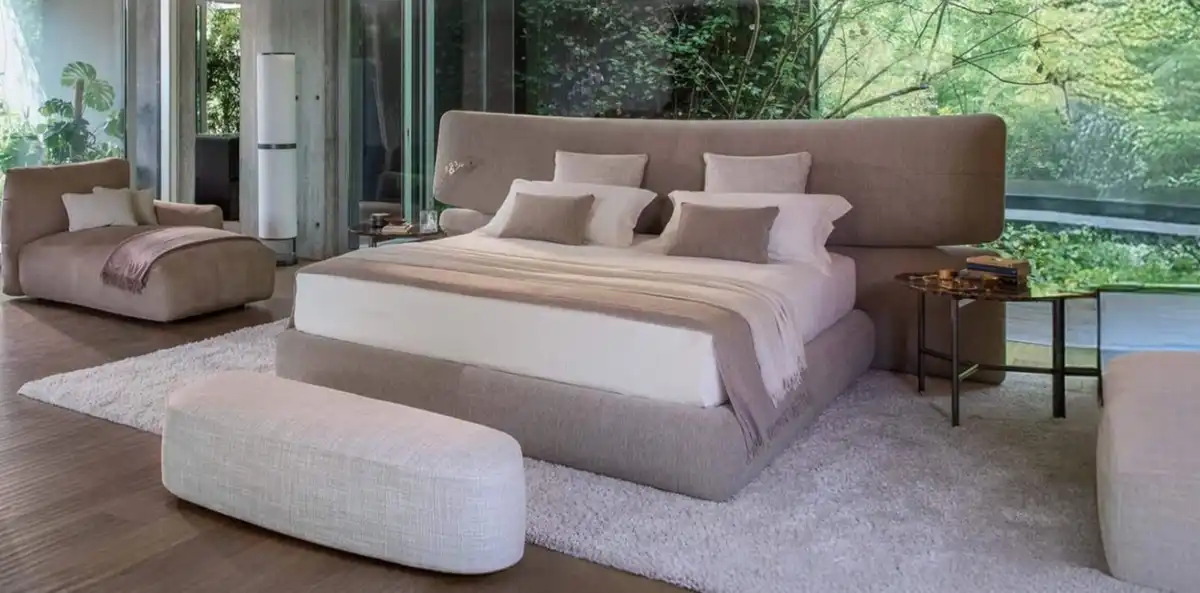
Open plans are often described as neutral or flexible, but in practice they rely on careful spatial structure. Without furniture doing this work, the space remains abstract and difficult to inhabit. Furniture introduces scale, orientation, and use where architecture intentionally steps back. It resolves ambiguity rather than creating it.
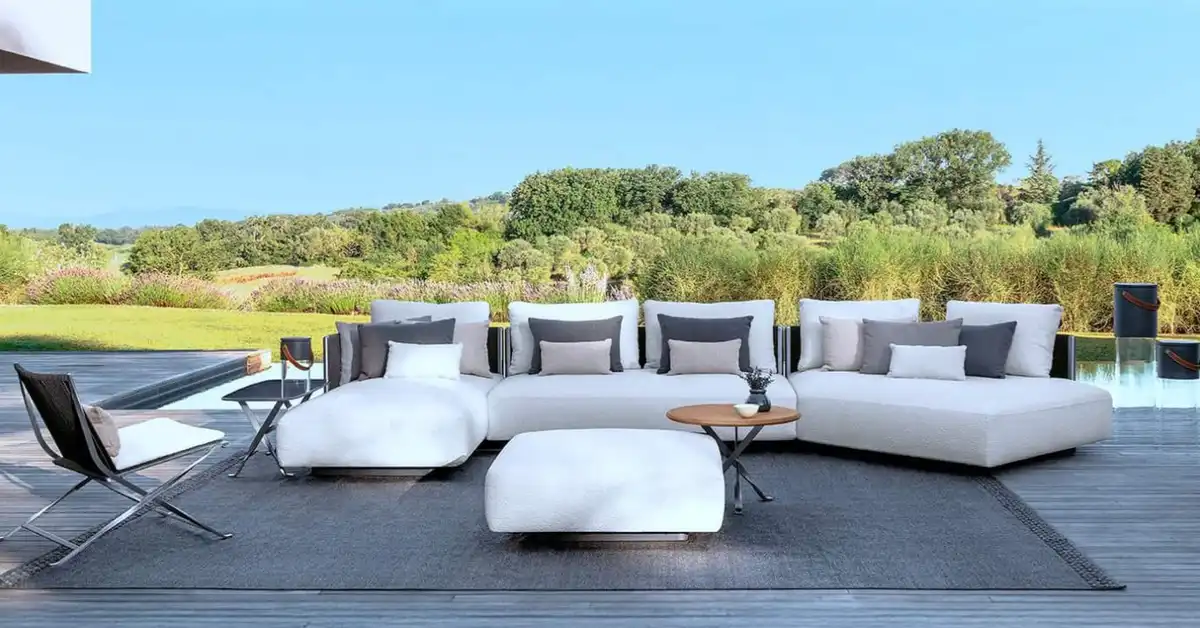
The relationship becomes clearer where interior and exterior spaces are closely linked. Large openings, sliding panels, and continuous floor surfaces reduce the legibility of thresholds. Furniture frequently becomes the last indicator of inside and outside. A dining table aligned with a roof beam, rather than a wall, marks a zone of shelter. Seating placed just beyond a fully open façade suggests occupation without enclosure. The architecture allows this overlap, but furniture gives it practical meaning.
As furniture begins to carry more spatial responsibility, it also becomes less temporary. Pieces grow heavier and more stable. Storage takes on a plinth-like quality. Seating aligns with structural grids or repeats architectural geometry. What was once considered loose fit-out starts to behave more like fixed infrastructure. The boundary between architecture and furnishing blurs in use, not in theory.
Furniture also plays a critical role in mediating scale. Long sightlines and uninterrupted floor plates can feel disproportionate to the body. Introducing elements with mass—deep shelving, continuous seating, thick tables—breaks down that scale without reintroducing walls. The space remains open, but it becomes legible and usable.
Los Angeles residential architecture provides a useful context for this condition. Climate supports extended openness, and construction systems often favor span over subdivision. In many houses, furniture compensates for what the building omits. It absorbs daily use, exposure to light, and informal patterns of occupation that rigid architectural elements are less suited to manage.
Material behavior reinforces this role. Timber darkens unevenly where sunlight reaches it. Upholstery responds to temperature shifts more visibly than walls. Metal surfaces register touch. These changes record occupation and time. Architecture frames environmental conditions, but furniture often shows their effects most clearly.
Circulation is also shaped through furniture rather than enclosure. With corridors minimized or removed, movement is guided through occupied space. The back of a sofa becomes a boundary. A run of cabinets establishes an axis. These are subtle moves, but they require precision. Poor placement can obstruct movement instead of organizing it.
For this reason, furniture selection has become more deliberate in architectural practice. Designers increasingly seek pieces that align with the building’s dimensions, materials, and spatial logic. This is less about customization and more about compatibility. References to regionally developed furniture often indicate this alignment rather than taste or status.
What is notable is how quietly this integration now happens. Furniture rarely announces itself as a focal point. Even substantial pieces recede into the spatial reading of the house. This restraint reflects a broader skepticism toward novelty for its own sake. If furniture functions as part of the architectural system, it cannot constantly demand attention.
Drawings reflect this change. Furniture appears earlier in the design process, sometimes alongside structure and envelope. Plans without furniture risk misrepresenting how space will be used. Sections without seating or storage ignore occupation at eye level. Furniture has become a working design tool rather than a finishing layer.
Flexibility has not disappeared, but it has narrowed. Certain elements remain fixed to support varied use around them. A built-in bench may serve multiple functions, but its position is stable. The architecture depends on that stability to remain coherent.
As residential architecture continues to favor openness and continuity, furniture’s role is unlikely to diminish. Not as an object of display, but as a quiet participant in circulation, scale, and daily use. In houses where walls withdraw, furniture increasingly tells occupants where to move, where to stop, and where to stay.
Comments on this guide to Furniture as spatial infrastructure in contemporary housing article are welcome.
Furniture
Furniture Posts
Choosing the Ideal Upholstery for your Furniture
From ordinary to extraordinary: custom furniture
++
Property
Architecture
Comments / photos for the Furniture as spatial infrastructure in contemporary housing page welcome.