Fixed CO Gas Detectors for Industrial and Commercial Buildings: A Safety Guide
6 December 2025
Today, carbon monoxide (CO) remains one of the most dangerous industrial by-products. CO is an odorless, colorless, and non-irritating gas. It can build up in enclosed places, posing a serious hazard to life before employees or residents notice a problem. CO accumulation in boiler rooms, mechanical rooms, tunnels, parking structures, fuel-handling facilities, and industrial sites contributes to thousands of incidents worldwide each year.
Fixed carbon-monoxide monitoring devices are thus no longer “nice to have.” Fixed CO Gas Detectors are now a crucial component of every facility’s safety plan as industries implement more stringent safety rules and automated monitoring systems. These detectors guarantee round-the-clock monitoring, prompt alarm activation, and dependable integration with building management, ventilation, and fire systems.
Nevertheless, despite their significance, many decision-makers still lack clarity about how these systems work and how to select the right ones, where to place them, or how to choose among several types. This article will help in understanding the working of carbon monoxide detectors, where they’re necessary, and how to confidently choose the best fixed carbon monoxide gas detectors for your building or industrial site.
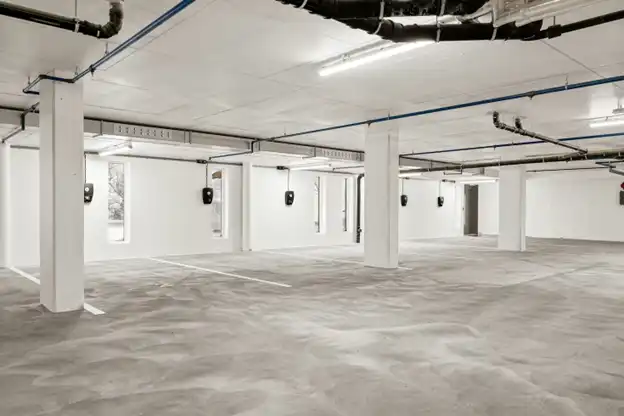
Figure 1. Underground parking garage. Image source: Unsplash.
Why Carbon Monoxide Monitoring Is Essential
Continuous carbon monoxide monitoring has become increasingly essential for several reasons.
First, structures are becoming increasingly airtight. Unfortunately, since modern buildings focus on efficiency and energy savings, hazardous gases may stay trapped for longer periods of time. Mechanical ventilation is thus extremely important for underground parking lots, tunnels, enclosed loading workshops, commercial kitchens, and mechanical rooms. Such ventilation is only effective when paired with real-time monitoring.
Second, safety regulations by international authorities have evolved. Continuous gas-monitoring systems are now mandated in many locations where automobiles or combustion equipment are present. In fact, major building codes and international standards—such as ASHRAE 62.1, which defines minimum ventilation requirements, and EN 50545-1, which specifies gas-detection criteria for enclosed car parks and tunnels—explicitly require continuous carbon monoxide monitoring in enclosed or semi-enclosed spaces.
Lastly, long-term low-level exposure is now well understood. When frequently inhaled, even minute levels of carbon monoxide may lead to illnesses like headaches, exhaustion, and impaired cognitive function. Because of this, continuous detection using Fixed CO Gas Detectors serves as both a safety precaution and a means of maintaining high indoor air quality that is safe for employees and residents.
How a Fixed Gas Detection System Actually Works
Fixed CO Gas Detectors may seem complicated, but the basic principle behind their manufacturing and operation is very simple.
Fixed CO Gas Detectors contain an electrochemical sensor that responds when carbon monoxide enters the detecting chamber. An electrical signal is generated when the gas interacts with the internal chemical cell. This signal is interpreted by the instrument, which then shows the concentration in parts per million (ppm). The controller triggers alarms or activates ventilation systems when concentrations exceed preset thresholds.
Building systems can react instantly due to this automated approach. In modern buildings, these detectors are typically integrated into the Building Management System (BMS) or the broader MEP (Mechanical, Electrical and Plumbing) infrastructure, enabling automated ventilation control, alarm management, and data logging. In advanced projects, carbon monoxide detection data is also incorporated into BIM (Building Information Modeling) platforms to support system coordination and lifecycle management.
To support these integrations, many facilities rely on industrial gas detection solutions that can be seamlessly connected with BMS platforms and other safety systems.
These sensors are currently the norm for permanent installations in commercial and industrial settings due to their accuracy, selectivity, and stability in the face of temperature and humidity fluctuations.
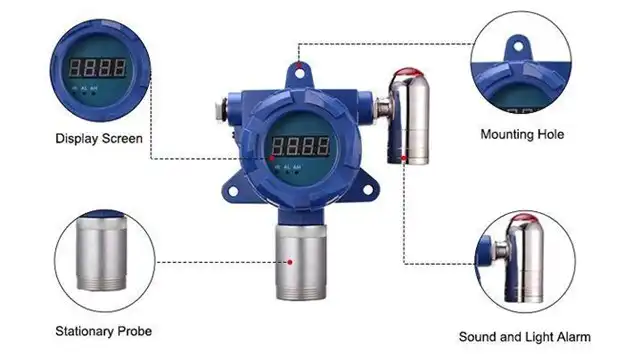
Figure 2. Fixed carbon monoxide (CO) gas detector (Model: GD300-CO).
Where You Need Fixed Gas Detection—and Why Location Matters
Before placing the detector anywhere, it is important to consider airflow, equipment arrangement, and structural design. One of the most crucial elements in identifying a detector is its location.
These are the areas where fixed detectors are typically essential:
- Parking garages and vehicle bays
Exhaust gas from vehicles contains carbon monoxide, which is one of the most common sources of CO accumulation. Detectors help regulate ventilation systems so that the fans operate only when necessary, saving significant energy. - Mechanical, boiler, and furnace rooms
Any fuel-burning appliance has the potential to emit hazardous gases, particularly during start-up or incomplete combustion. - Industrial production areas and warehouses
Forklifts, heating equipment, and industrial processes can all introduce carbon monoxide into the workplace. - Cellars, underground passages, and tunnels
Closed structures with insufficient natural airflow require constant monitoring. - Healthcare or laboratory facilities
Gas emissions from laboratory procedures and sterilization equipment may require ongoing observation. - Confined or restricted-ventilation spaces
A permanent detector should be installed in any location where humans might operate without direct airflow.
The height and exact position of fixed carbon monoxide gas detectors are also crucial. Because carbon monoxide moves evenly through the air, devices are often positioned at breathing level, around 1.5 meters (5 feet) from the floor. Avoid installing detectors in corners, behind obstructions, or near supply air outlets, where airflow patterns may affect measurement accuracy.
What Features Truly Matter When Choosing a Detection System
Not every fixed gas detector is created equal, and greater performance isn’t necessarily correlated with a higher price. Knowing which features have a significant impact on practical application is crucial.
1. Detection precision and response time
Select Fixed CO Gas Detectors that offer steady, precise readings and respond fast to increasing gas concentrations. The most effective methods are equally reliable in identifying high-risk and low-level exposure scenarios.
2. Communication outputs
Depending on your construction, you could require:
- Digital protocols like Modbus for automation
- Analogue signals for building management structures
- Relay outputs to activate fans or alarms
It’s essential to match these outputs for your contemporary infrastructure.
3. Durability and housing high-quality
Strong, corrosion-resistant enclosures are essential for fixed carbon monoxide gas detectors, installed in garages, boiler rooms, and other commercial environments. Tolerance for both temperature and humidity is important.
4. Ease of calibration and protection
Over time, all sensors wander. Seek solutions that enable easy recalibration, ideally without the need for complex instruments. Remote adjustments are available for certain models, which cuts down on maintenance time.
5. Certification and compliance
Depending on the type of facility, you may need ATEX certification, explosion-proof housing, or other industry certifications. Always confirm compliance before purchasing.
How to Make the Right Decision for Your Facility
Once you understand your environment, choosing the best CO monitoring system becomes easy. Here’s a simple method to do it:
Step 1: List all possible sources of carbon monoxide emissions. Any combustion sources must be noted, including generators, heaters, boilers, cars, and industrial activities.
Step 2:
Map airflow and ventilation patterns. Determining the location and number of detectors requires an understanding of how air flows in the area.
Step 3:
Confirm building and safety laws in your area. This may include international standards such as ISO 7240, EN 50545-1, or national fire codes, along with ventilation requirements outlined in ASHRAE 62.1. Many businesses install detectors only to later discover that their location or model does not comply with regulations. By reviewing the code first, you can avoid costly rework.
Step 4:
Select Fixed CO Gas Detectors with the appropriate features. Your building’s conditions should be taken into consideration when determining accuracy, communication type, durability, and certification. Many modern detectors, such as those produced by Gas Dog, offer Modbus communication, ATEX-rated enclosures, and integrated sound–light alarm modules.
Step 5:
Implement a maintenance plan. A detection system’s accuracy depends heavily on proper calibration. Create a schedule for regular calibration and inspection.
Facility managers, engineers, and building owners can follow these steps to make informed decisions without getting bogged down by technical details.
Most reputable manufacturers—including Gas Dog—offer fixed CO detectors built around the same engineering requirements: electrochemical sensing, 4–20 mA or RS485 communication, compatibility with BMS/PLC systems, and ATEX-certified options for hazardous locations.
Final Thoughts
Monitoring carbon monoxide is a fundamental component of good building management, not just a technological requirement. A dependable fixed detection system guarantees safety, compliance, and peace of mind as structures become more complex and regulations become more stringent.
When properly located and maintained, well-chosen fixed CO gas detectors act as a silent protector for employees, tenants, and guests around the clock.
This article gives you the knowledge and clarity you need to choose the best type of system for your environment with confidence.
Comments on this guide to Fixed CO gas detectors for buildings safety article are welcome.
Fire Safety
Fire Safety Posts
Fire Safety Engineering for Buildings

How to make your house fire safe
Safety Precautions Against Home Fire
++
Architecture
Contemporary Green Architecture Design
Comments / photos for the Fixed CO gas detectors for buildings safety help guide page welcome