Aluminum in Residential Architecture: Why the Material Has Moved from Commercial to Home Design
18 May 2026
For most of the 20th century, aluminum was firmly associated with commercial and industrial architecture: curtain wall facades, airport terminals, office towers, and large-span structures where its strength-to-weight ratio made it the obvious specification choice. Residential architecture largely stayed with timber, brick, and steel. That division has now collapsed.
Over the past decade, aluminum has moved decisively into the residential sector, appearing in window and door systems, cladding, roofing, balustrades, and increasingly in outdoor structures. The shift is not a trend in the superficial sense. It reflects genuine technical advances that have resolved the performance limitations that held the material back in domestic contexts for decades, combined with a sustainability case that is becoming harder to argue against. This article examines why that shift has happened, what it means for residential design, and where aluminum is heading in the home.

Why Aluminum Was Slow to Enter the Home
Aluminum’s story in construction begins in the post-war commercial boom of the 1950s and 1960s. Curtain walling systems, industrial cladding, and large-span roof structures made the material synonymous with a particular kind of architecture: efficient, scalable, and deliberately not domestic. The associations that built up around it during this period proved remarkably durable.
Early attempts to bring aluminum into residential design during the 1970s and 1980s largely backfired. Thin sections, poor thermal performance, and low-grade powder finishes that faded and chalked within a few years gave the material a reputation in domestic contexts as a cheap alternative to timber: the material of replacement windows in social housing rather than considered residential design. That perception lingered long after the underlying technology had improved.
The practical performance problem was real, however. Standard aluminum conducts heat readily, which meant early aluminum window frames created cold bridges at the building envelope, generating condensation, heat loss, and energy performance issues that simply did not arise with timber or uPVC equivalents. Until that problem was solved at the material level, aluminum could not compete seriously in the residential market on performance grounds, regardless of its other attributes.
The key point is that the material itself was never the problem. The applications, and the technology available to support them, were.
What Changed: Technology, Fabrication, and Finish
The turning point was thermal break technology. By separating the inner and outer aluminum sections of a frame with a continuous insulating barrier, typically a polyamide strip, engineers eliminated the cold bridge that had made early aluminum windows perform so poorly in cold climates. The result was a frame that combined aluminum’s structural and aesthetic properties with thermal performance comparable to timber or uPVC. Modern thermal break systems improve insulation values by up to 40% compared to unbroken aluminum profiles, making the material a viable residential specification even in northern European and North American climates where thermal performance is a primary concern.
Powder coating technology advanced in parallel. Where early residential aluminum finishes offered a limited palette that aged poorly, contemporary powder-coated and anodized finishes now offer over 300 certified colour options with fade resistance guaranteed for 25 years or more. This transformed what had been a cold industrial surface into a genuinely expressive design material, capable of reading as warm, refined, and considered rather than corporate.
Perhaps the most significant change for architects was the development of precision extrusion processes capable of producing ultra-slim profiles at scale. Slimline aluminum frames with narrow sightlines allow significantly more glass area within a given opening, and structures with very slim profiles let in meaningfully more daylight compared to conventional framing systems. The aesthetic effect is considerable: spaces feel larger, the connection between interior and exterior reads as more immediate, and the frame recedes visually in a way that thicker timber or uPVC equivalents cannot achieve.
Manufacturing cost reductions have followed these technical advances, bringing what were once bespoke commercial-grade specifications within reach of residential budgets. The premium over timber and uPVC has narrowed substantially, and when whole-life costs are considered, including maintenance, replacement cycles, and end-of-life value, aluminum now makes a strong economic case alongside its performance and aesthetic ones.
Where Aluminum Is Now Appearing in Residential Design
The most established application remains windows and doors. Slimline bifold, sliding, and pivot systems in aluminum are now effectively standard specification in contemporary high-end residential design across the UK, Europe, and Australia, and are gaining ground rapidly in the North American market. The ability to achieve very large opening widths without intermediate structural members, combined with slim sightlines and consistent colour across the frame, makes aluminum the natural choice for architects working to dissolve the boundary between interior and exterior space. Where owners want the thin bars of traditional steel casements, thermally broken slim steel-look aluminum windows can echo their proportions and divided-light patterns, although the visible frame width still depends on the specific frame, sash and mullion detail.
Facade cladding is the second major area. Aluminum rainscreen systems, long established in commercial and educational buildings, have been adopted in new-build residential at both the multi-unit and single-family scale. The material’s dimensional stability, resistance to moisture ingress, and low maintenance requirements make it particularly well-suited to the external envelope of contemporary residential buildings where traditional render or timber cladding would require ongoing attention.
Balustrades and staircases represent a third area of significant growth. Powder-coated aluminum balustrade systems have replaced painted steel and hardwood in many contemporary residential projects, offering comparable visual refinement at lower long-term cost and without the maintenance requirements of either alternative. Internal staircase stringers and handrails in aluminum are following a similar trajectory in high-specification new-build and renovation projects.
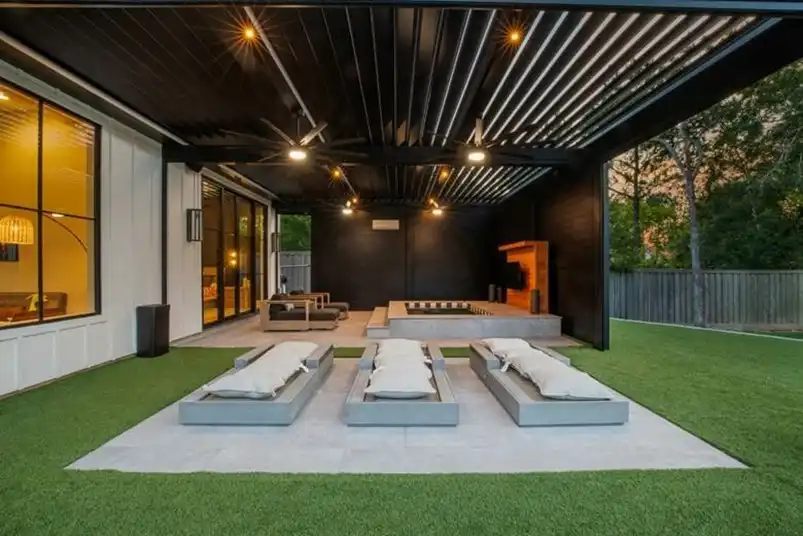
The most recent frontier is outdoor structures. Aluminum’s combination of low weight, corrosion resistance, structural performance, and powder-coated finish quality makes it the dominant material for louvered pergolas, canopies, and covered outdoor living structures at the residential scale. The material allows the kind of precision engineering, including motorized moving parts, integrated drainage, and structural spans, that timber and steel cannot deliver at equivalent section sizes and maintenance profiles.
Brands such as Hansø Home have brought aerospace-grade aluminum construction to the residential pergola market, offering motorized louvered structures engineered to the kind of structural and weather performance specifications, including Category 5 hurricane ratings and snow load tolerances, previously associated with commercial architecture. The result is an outdoor structure that functions as a genuine architectural extension of the home rather than a garden accessory.
The Sustainability Case
Aluminum’s environmental credentials have strengthened considerably as the sustainability argument has moved to the centre of architectural specification decisions. The material can be recycled indefinitely without any loss of structural or aesthetic quality, a property that places it in a different category from most competing materials whose recycling degrades performance over successive cycles.
The energy intensity of primary aluminum production has historically been a counterargument, and it remains a legitimate one. However, recycled aluminum requires approximately 5% of the energy needed to produce primary material from bauxite ore, and the proportion of recycled content in construction-grade aluminum has increased substantially as collection and processing infrastructure has matured. Many aluminum framing and cladding products now incorporate high recycled content and are designed for full recyclability at end of life, reducing the carbon footprint of specification decisions over the building’s lifetime.
Architects increasingly require materials with verifiable lifecycle credentials, and aluminum is well-positioned to meet that requirement. Its durability, typically measured in decades rather than years, means the embodied carbon cost of production is amortized over a long service life. Combined with the low-maintenance profile that reduces the need for coating, treatment, and replacement cycles, aluminum’s whole-life environmental performance compares well against timber, steel, and uPVC across most application categories.
What Aluminum Enables That Other Materials Cannot
Beyond performance and sustainability, aluminum opens design possibilities that other materials at equivalent cost and scale cannot match. Slim profiles allow structural spans not achievable in timber at comparable section sizes, which matters both structurally and aesthetically in large opening applications. The ability to achieve very long uninterrupted runs of glazing or cladding without visual interruption gives architects a spatial quality that reads differently from anything achievable with heavier framing systems.
Design consistency across the building envelope is a related advantage. Specifying aluminum across windows, doors, cladding, balustrades, and outdoor structures creates a coherent material language that reads as deliberate rather than assembled. The same powder-coat colour applied across the window frames, the balustrade, and the pergola structure produces a visual unity that would be difficult to achieve across different materials even with careful colour matching.
Low maintenance as a design decision deserves its own consideration. Specifying aluminum removes the maintenance cycle from the client’s future: no painting, sealing, or rot management, no replacement of deteriorated sections, no variation in surface quality as the building ages. Powder-coated finishes that hold their colour for 25 or more years mean the building ages on the architect’s terms, not the weather’s. For clients who want a building that continues to look as specified without ongoing intervention, aluminum is the most reliable choice currently available across most application categories.
A Material That Has Earned Its Place
Aluminum’s move from commercial workhorse to residential design material of choice is not a story of fashion or marketing. It is a story of technology catching up with potential. The thermal break, fabrication, and finish advances of the past two decades have resolved the performance limitations that held the material back in residential contexts, and the sustainability case has since made it the forward-looking choice for architects who think beyond the initial specification to the building’s full lifecycle.
From slimline window frames to full facade cladding systems, from balustrades to motorized outdoor structures, aluminum is now present across the entire residential envelope. Its role in domestic architecture is still expanding, driven by improving manufacturing economics, tightening energy performance requirements, and a design culture that increasingly values longevity, consistency, and the visual discipline that slim, precise profiles make possible.
The material that once belonged exclusively to airports and office towers has found a new home in the house. Given the technical and environmental case for it, that shift looks permanent.
Comments on this help guide to Aluminum in residential architecture – home pergola material for outdoor living article are welcome.
Building Articles
Architecture
++
Gardens
Garden Furniture
How to choose right furniture for your home
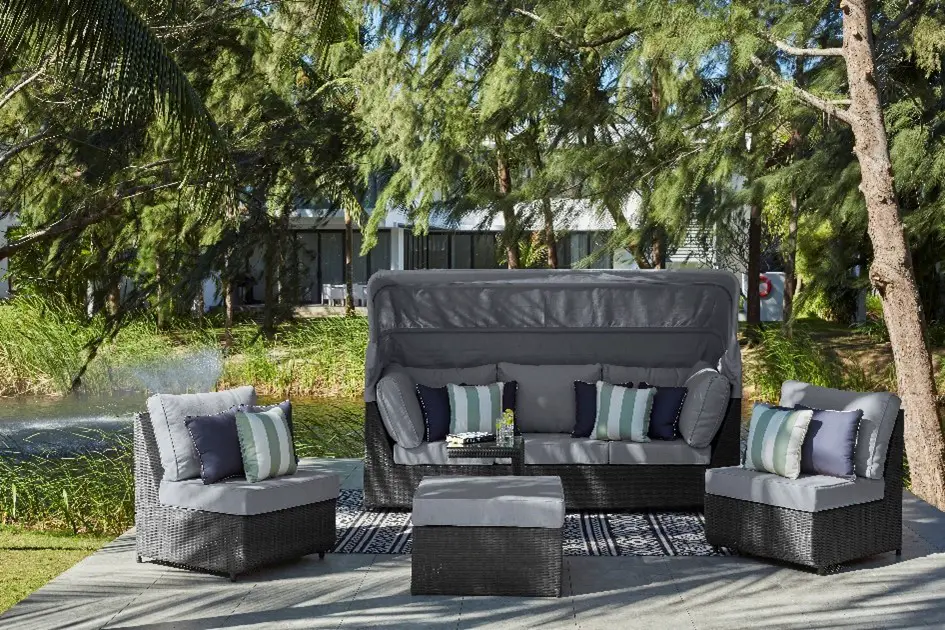
Source: Moda Furnishings
Garden Design Posts
Planting perennials in your garden benefits
Keep your Flower Garden Bright and Blooming
Comments / photos for the Aluminum in residential architecture – house pergola outdoor page welcome.